Concrete Slab Calculator – Patios, Floors & Driveways
Measure Your Slab Project
Measure each slab section, select thickness and units, and prepare an order with separate allowance, bag and ready-mix options.
1. Project & measurement setup
📘 Try a slab example
Load actual dimensions and see the calculated slab volume, allowance and order summary. All values can be edited.
2. Project sections
i
Name each pour, select the shape that represents the space concrete will fill, then enter dimensions and units. Use Add concrete for new pours and Deduction / void to subtract real empty space. The diagram beside each section result helps confirm the geometry.
Examples: a circular solid slab is a short cylinder (round shape with slab thickness as height). For a hollow circular ring choose Tube / ring. Solid steps are different from supported structural stair flights. For a variable-thickness ramp, use its verified measured volume if a suitable ramp shape is unavailable.
Split thickened edges, depressions or different slab sections into separate non-overlapping pours. If the edge section overlaps the main slab, add only the extra depth/volume, not the full edge twice.
3. Order allowance
Editable planning allowance for uneven grade, form variation, spillage or placement loss. It is not a structural safety factor.
A planning default only. Replace it with your supplier’s actual ordering increment.
4. Ready-mix supplier & cost settings
Supplier delivery minimums, short-load billing rules, truck sizes and rounding vary. Enter actual supplier rules. A minimum billed volume is not necessarily a minimum delivered volume.
5. Premix bag settings
Use the yield printed on the exact bag or product data sheet. Bag weight alone does not reliably determine mixed-concrete volume.
Concrete order result
Calculation steps with your values
Quick volume converter
Your take-to-the-store checklist
Concrete Order Summary
Your final purchasing checklist. Choose one supply option below and verify quantities before buying.
Project sections and deductions
| # | Section | Shape | Qty | Use | Volume (m³) | Volume (yd³) |
|---|
A. Delivered ready-mix concrete
B. Premixed concrete bags
Use the exact bag product and its stated mixed yield. Bag quantities are a separate alternative to ordering ready-mix.
C. Buy cement, sand & aggregate separately
Prefer to mix materials on site? Select a nominal planning ratio or enter your approved proportions. Your estimated shopping quantities will appear below.
Enter your material-mixing ratio
Planning assumption; adjust to your estimating method.
Leave blank unless supplied by your approved mix/design basis.
Important: nominal ratios are estimating examples, not strength guarantees. For M25/M30 and other design-mix concrete, use approved project or supplier proportions.
Important: A 1 : 2 : 3 ratio describes proportions by volume—not automatically one bag of cement plus two bags of sand and three bags of stone. The result gives cement mass / estimated 50 kg cement bags and sand and aggregate volumes. Supplier bag sizes, loose-material bulk densities and moisture differ; verify them before ordering. Mix proportions do not certify concrete strength.
🔗 Share, save & reopen your concrete project
Show text preview for copying
Large 480 × 480 source with fallback. Project JSON is the backup for very large jobs.
Concrete slab calculator: practical measurement guide
Read guide
Use these checks before treating the output as a purchase quantity.
When a slab is not one uniform thickness
Split thickened edges, depressions or different slab sections into separate non-overlapping pours. If the edge section overlaps the main slab, add only the extra depth/volume, not the full edge twice.
Circular slabs and openings
A circular solid slab uses the round-cylinder shape: diameter × thickness. A ring-shaped slab can use the tube/ring shape. For rectangular openings, add a deduction matching the slab thickness; never deduct an opening that was already excluded from the measured slab footprint.
Thickness and project specifications
Do not use this calculator to choose a structural slab thickness. Thickness, reinforcement, support conditions, joints and concrete grade must come from the drawings, competent designer or relevant construction specification.
📷 Reference pictures (open — click to collapse)
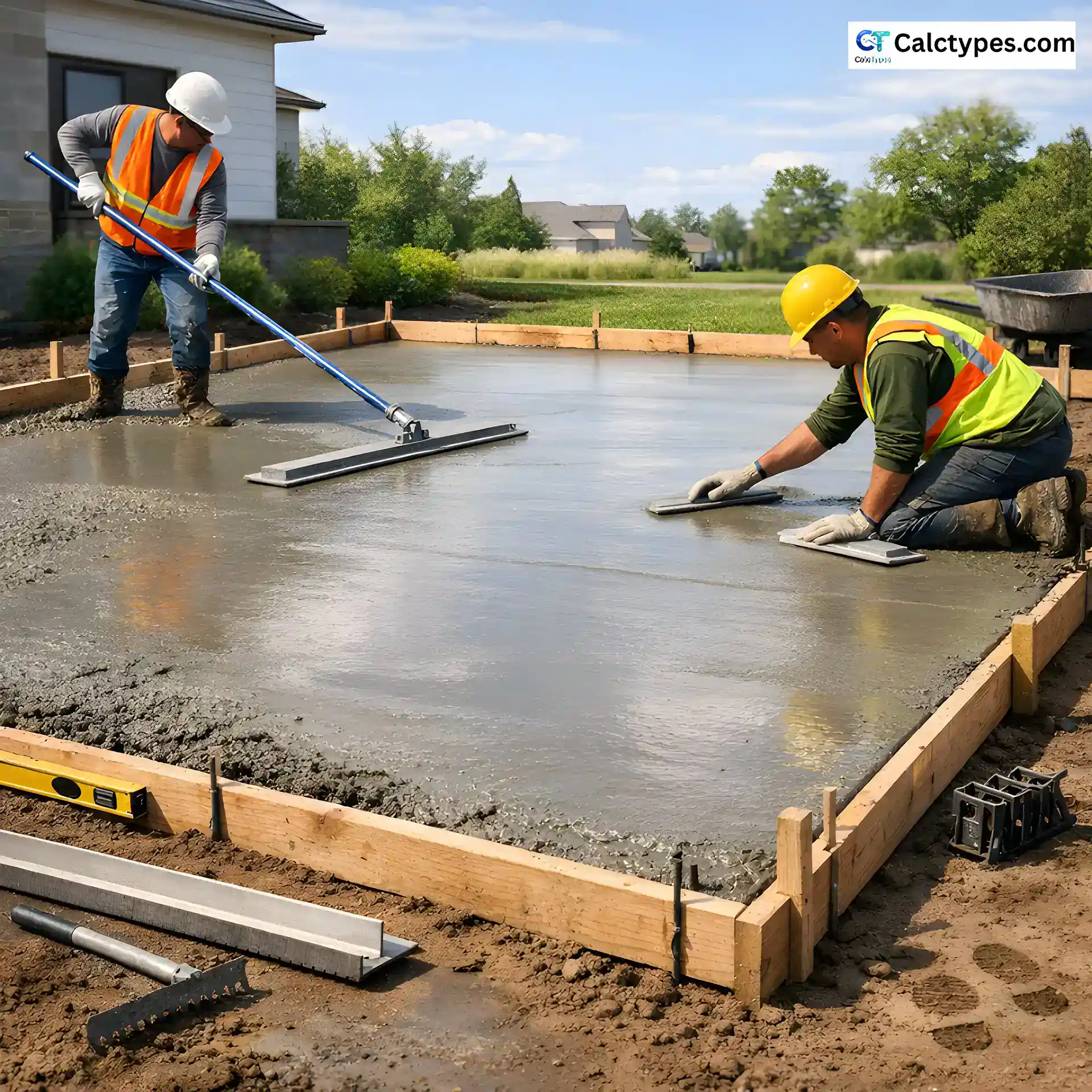
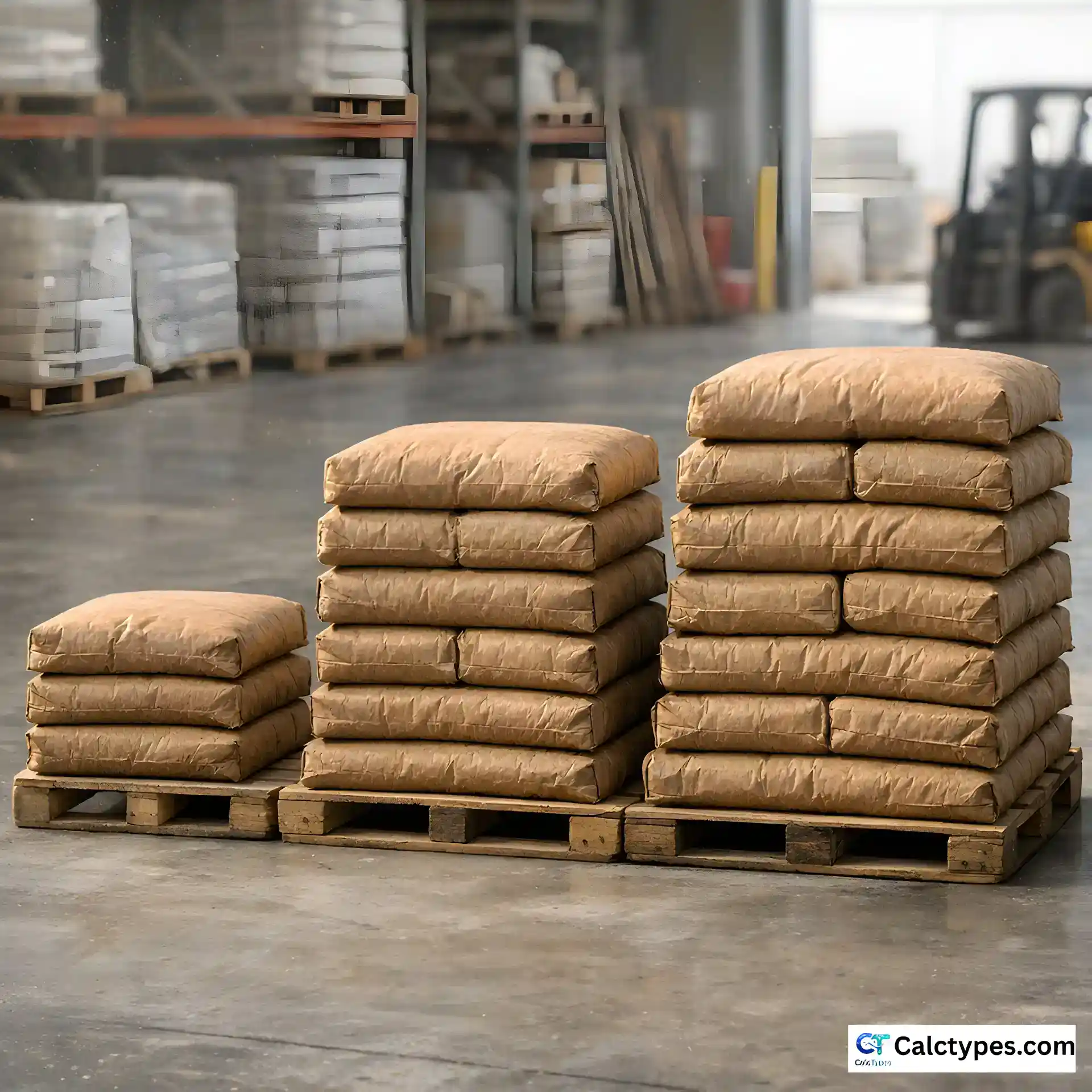
These reference photos support the calculator. They are illustrations, not project-specific drawings. You can collapse the entire picture guide whenever you prefer more space.
Assumptions & Limitations
These estimates depend on the dimensions, units, mix proportions, bag-yield and supplier information you provide. Please review the points most relevant to your purchase.
📐 Measurements & geometry
Dimensions are assumed to describe the actual volume to fill. Slabs are treated as uniform-thickness solids. Round shapes and tube/ring sections use the indicated geometry. Variations in ground level, excavation, irregular profiles, embedded members and unmodelled voids are not automatically measured.
➕ Allowance & deductions
Percentage allowance is applied to the calculated net volume. It is a user-selected planning allowance, not a guaranteed waste percentage or structural safety factor. Only the deductions that you enter are subtracted. Inspect all dimensions and ensure no area is counted twice.
🧱 Bags & supplier ordering
Bag count is rounded upward using the actual mixed yield of the selected product. Supplier order increment, minimum load, vehicle capacity, prices and extra charges vary and must be confirmed directly. A supplier minimum billed quantity can differ from the concrete actually delivered.
🪨 Mixing your own ingredients
Nominal volumetric ratios estimate cement, sand and coarse aggregate quantities using assumed dry-volume and bulk-density factors. They do not account automatically for aggregate grading, moisture correction, air content, admixtures, mixing losses or strength verification. Water demand and structural performance require an approved mix/design basis.
🛠️ Practical site considerations
Allow for safe formwork, compaction, reinforcement and cover, site access, truck/pump availability, labor, placing sequence, weather, curing, quality control and local regulations. These are not checked by the volume calculation.
✅ Before making a payment
Compare measurements with approved drawings and actual site conditions, confirm the concrete specification, ask suppliers for written product yields and quotation terms, and have a qualified professional review structural or safety-critical work.
Concrete Slab Calculator: Questions & Answers
Expand any question for a detailed practical explanation and limitations.
How do I calculate concrete for a slab?
For a constant-thickness rectangular slab, multiply length by width by thickness after converting all measurements to one unit. For feet and inches, divide inches by 12 before multiplication. Convert cubic feet to cubic yards by dividing by 27. This is net placed-concrete volume, not the final supplier order. Add a separately chosen allowance for the job conditions, then apply only the rounding or minimums actually required by the concrete supplier.
Worked example: For a 12 ft × 10 ft patio with a uniform 4 in thickness, convert 4 in to 1/3 ft. Net volume = 12 × 10 × 1/3 = 40 ft³ = 1.4815 yd³. With 5% allowance, required volume is 42 ft³ = 1.5556 yd³. A supplier that sells in 0.25 yd³ increments would round this to 1.75 yd³, assuming no other minimum.
Does the calculator work for patios, garage floors and driveways?
Yes, for volume planning. The same geometric formula works for rectangular patios, driveways and floors when the volume is a constant-thickness slab. A large garage floor may contain thickened edges or isolated recesses. Measure these as additional non-overlapping project sections. Actual load capacity, reinforcement, joint spacing and thickness must follow a qualified design rather than being selected by a volume calculator.
What if one part of my slab is thicker?
Use more than one section: calculate the base slab volume, then add a separate volume for the additional thickness only. For example, if the full slab is 4 in deep and a 2 ft wide edge region is 8 in total, add a 4 in extra-depth strip, not a second 8 in strip over the original slab. Verify intersections so corners are not counted twice.
How is a circular slab different?
A circular solid slab is a short cylinder: π × (diameter ÷ 2)² × thickness. The round shape asks for diameter and height/depth, so use the slab thickness as its height. If concrete forms only an annular ring rather than a solid disk, choose the tube/ring shape and enter both outer and inner diameters.
How do I account for a drain or opening?
Where an opening lies inside the slab footprint you measured, add a deduction section for its actual empty concrete volume. For a simple through-opening, this is opening length × opening width × slab thickness. Do not subtract the opening again if your original dimensions already excluded it. Large openings or beams may have more complex details that require separate takeoff.
How much concrete should I allow for waste?
The calculator defaults to an editable 5% planning allowance. That is not a universal requirement. For a well-formed, measured slab the appropriate allowance may be small; excavated, uneven or complex work may need more. If you know there will be pump priming loss, overbreak or nonuniform thickness, include the real volume or a reasoned allowance. The result keeps net volume and allowance separate so you can review both.
Can I convert slab area directly into cubic yards?
Not without thickness. Area measures only the footprint. A 100 ft² slab at 4 in is 33.33 ft³, while that same area at 6 in is 50 ft³. Calculate volume first, and only then convert to yd³ or m³. The field-level unit menus are useful when a slab is measured in feet but its thickness is specified in inches or millimetres.
Should I buy bagged concrete or arrange a ready-mix truck?
This tool calculates the material quantities for both purchasing methods. Bag products may suit small quantities or locations that cannot accept a truck, while ready-mix may suit larger continuous pours. Compare real bag yield, local prices, delivery fees, labour, mixing capacity, placement time and supplier minimums. Bag totals and ready-mix volumes are alternatives, not quantities to add together.
Methodology & formulas
Page focus: concrete slab calculator. Split thickened edges, depressions or different slab sections into separate non-overlapping pours. If the edge section overlaps the main slab, add only the extra depth/volume, not the full edge twice.
Geometry
- Rectangular: V = length × width × depth.
- Round solid: V = π × (diameter ÷ 2)² × height.
- Tube / ring: V = π × [(OD ÷ 2)² − (ID ÷ 2)²] × height.
- Solid steps: V = width × tread × rise × n(n+1)/2, plus optional platform depth × total stair height × width.
- Curb + gutter: curb section + gutter/flag section along the entered length.
Ordering sequence
Added sections − deductions = net measured volume. Allowance is then added. Supplier increment/minimum is applied only afterward, so purchasing rules never change the underlying measured need.
Bags
Whole bags = required volume ÷ manufacturer-stated mixed yield per bag, rounded up. Bag weight is used only for handling/total dry weight, not to infer yield.
Site-mix materials
Optional material quantities use the selected parts and dry-volume factor. Cement mass uses an estimating bulk density of 1440 kg/m³. Real mix design depends on materials, grading, water, admixtures, exposure, workability and performance requirements.
Important Disclaimer
Planning and educational estimates only. CalcTypes is a calculation aid, not a survey, engineering design, specification, safety assessment, construction instruction, quality certification, or guarantee that your purchase quantity will be sufficient. Results are based entirely on the information entered and on stated assumptions. Errors in measurement, units, geometry, voids, material yield, site conditions, calculation inputs or supplier practices can cause shortages, surplus material, cost overruns and construction defects.
You are responsible for independent verification. Before ordering, mixing, placing or building, check all measurements and actual site conditions; validate the mix grade, strength and exposure requirements; confirm bag yields, supplier ordering/billing rules and prices; and obtain review and approvals from qualified engineers, contractors, local authorities and suppliers whenever appropriate. Do not use this calculator as the sole basis for structural or safety-critical decisions.
No professional relationship or warranty. Information is provided on an “as available” basis for general planning, without a promise of accuracy, completeness, suitability or fitness for a particular project. To the extent permitted by applicable law, CalcTypes does not accept responsibility for losses arising from reliance on unverified estimates, including material shortage, over-ordering, delays, damages or improper construction. Nothing here excludes liability that cannot lawfully be excluded.
Read our full website disclaimer: CalcTypes Disclaimer. This notice should be reviewed alongside your site’s legal terms by a qualified adviser; wording alone does not guarantee legal protection.
Sources
- QUIKRETE Concrete Mix 1101 data sheet — published approximate yields for common US bag sizes.
- QUIKRETE Mixing & Placing Concrete training — volume and bag-yield example.
- IS 456:2000 material reproduced in Quality Management Guidelines — nominal-mix provision for M20 or lower.
- Bureau of Indian Standards — current standard catalogue/reference.
- ASTM C94/C94M — Ready-Mixed Concrete.