Added Sugar vs Total Sugar: What’s the Difference?
Added Sugar vs Total Sugar: What’s the Difference?
A clear, practical guide to understanding both numbers on your nutrition label — and which one matters most for daily limits.
Flip over almost any packaged food and you’ll see two sugar-related rows on the Nutrition Facts label — Total Sugars and Added Sugars. They look similar but they mean different things, and mixing them up can make it harder to reduce added sugar.
Many public health guidelines and label tools — including the daily limits in our daily added sugar limit calculator and conversions in our % Daily Value to grams calculator — focus on added sugars, not total sugars.
This guide explains both terms clearly, shows you where to find each on the label, and tells you which number to focus on for everyday food decisions.
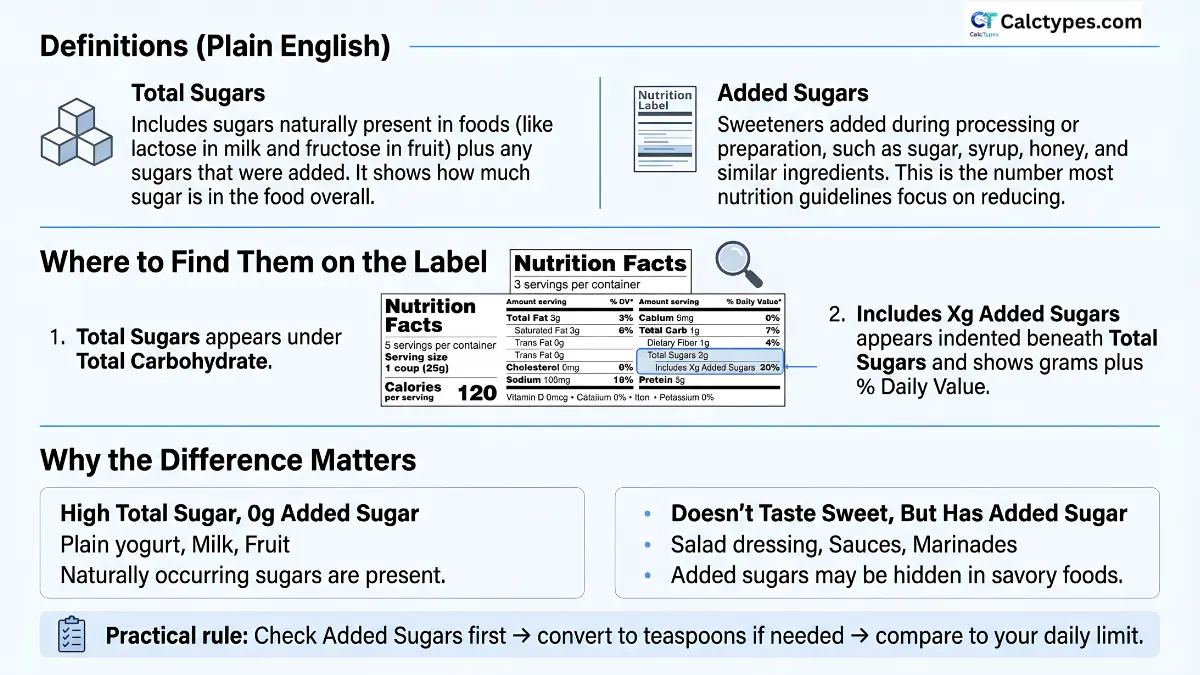
Total Sugars = naturally occurring sugars + added sugars combined.
Added Sugars = only the sugars added during processing or preparation (including honey/syrups/juice concentrates when used as sweeteners).
A plain glass of milk has total sugars (lactose) but zero added sugars.
On this page
What Each Term Means
Total Sugars
Total sugars is the sum of all sugars present in a food — both naturally occurring and added. It includes lactose from milk, fructose from whole fruit, and any sugar added during manufacturing. On US FDA labels, total sugars is listed in grams, but it does not have a % Daily Value.
Added Sugars
Added sugars are sugars and syrups that are added to foods during processing or preparation. They also include sweeteners like honey, maple syrup, agave, and fruit juice concentrates when used as sweeteners. On the updated US Nutrition Facts label, added sugars must be listed separately (compliance began in 2020 for large manufacturers and 2021 for smaller manufacturers).
Where to Find Them on the Label
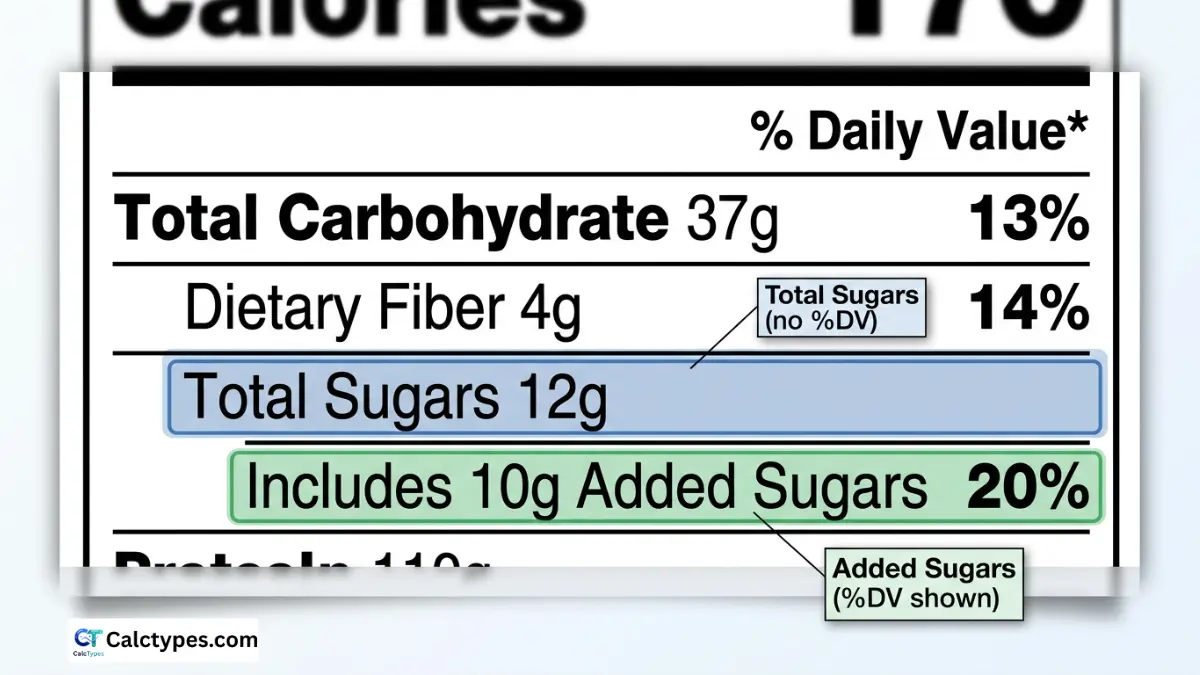
On a US Nutrition Facts panel, both rows appear under Total Carbohydrate:
- Total Sugars Xg — listed in grams (no % DV)
- Includes Xg Added Sugars — XX% Daily Value — indented directly below it (grams + % DV)
The % Daily Value column appears next to Added Sugars because added sugars have a defined FDA Daily Value (50g/day on a 2,000 kcal diet). A full label walkthrough is available in our guide on how to read the added sugar label.
Understanding where to look is also covered practically at this guide to reading sugar on labels, which walks through real packaging examples.
Side-by-Side Comparison
| Feature | Total Sugars | Added Sugars |
|---|---|---|
| What it includes | All sugars (natural + added) | Only sugars added during processing/preparation |
| Includes natural fruit sugars? | Yes (if fruit is an ingredient) | No |
| Includes lactose (milk sugar)? | Yes | No |
| Includes honey / maple syrup? | Yes | Yes (when used as sweeteners) |
| % Daily Value shown on US labels? | No | Yes (based on 50g/day FDA Daily Value) |
| Guideline framing | Not typically set as a single limit | AHA provides practical daily limits (commonly cited ~25g women / ~36g men). WHO recommends keeping “free sugars” <10% of energy (and suggests <5%). |
| Best number to track vs daily limits? | Less actionable | Yes — this is the number to watch |
Real Food Examples
These examples show how Total Sugars and Added Sugars can differ significantly for the same product — and how added sugar can show up even in savoury foods. Values below are typical examples and can vary by brand and serving size.
| Food | Total Sugars | Added Sugars | Why they differ |
|---|---|---|---|
| Plain whole milk (1 cup) | ~12g | 0g | All sugar is natural lactose |
| Chocolate milk (1 cup) | ~25g | ~12g | Natural lactose + added sweeteners |
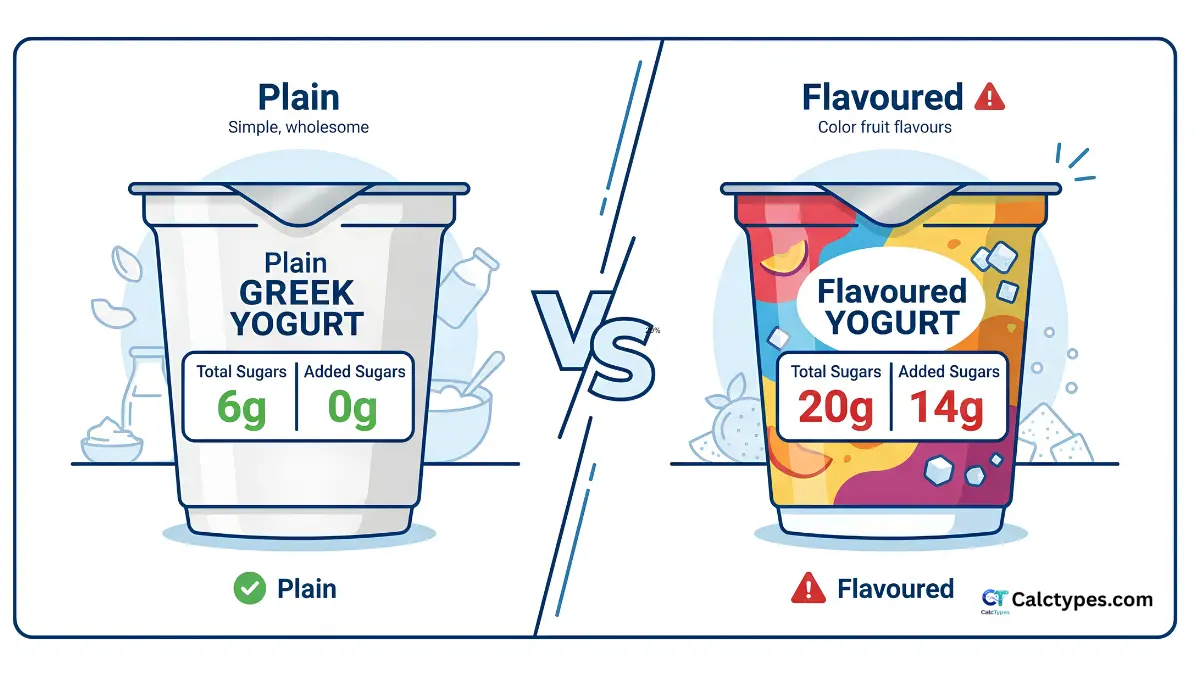
| Plain Greek yogurt | ~6g | 0g | Natural lactose only |
| Flavoured yogurt | ~20g | ~14g | Natural lactose + added sugar/syrup |
| Whole apple (medium) | ~19g | 0g | All sugars occur naturally in the fruit |
| Apple juice, 100% (250ml) | ~24g | 0g | Sugars occur naturally in juice; no sweetener added |
| Apple “juice drink” / cocktail (250ml) | Varies | Often >0g | May include added sweeteners; check the Added Sugars line |
| Cola (355ml can) | ~39g | ~39g | Almost entirely added sugar (e.g., cane sugar/HFCS) |
| Tomato pasta sauce (½ cup) | ~9g | ~6g | Natural tomato sugars + added sugar |
The pasta sauce example is a good reminder that added sugar can hide in savoury foods. For a broader list of product categories where this is common, see this guide to hidden added sugar in foods.
Why the Difference Matters (Real Decisions)
A food can have “high total sugars” but “0g added sugars” (plain yogurt, milk, whole fruit). Meanwhile, some foods don’t taste sweet but can still contain added sugars (sauces, dressings, condiments).
A practical workflow is: check Added Sugars (g) → convert to teaspoons (optional) → compare to your daily limit. You can do this quickly with: grams to teaspoons and daily added sugar limit.
If you only have %DV and want grams, use %DV to grams. If you want calories, use sugar calories calculator.
Questions People Ask
Is added sugar worse than total sugar?
They’re not directly comparable because they measure different things. In many studies, higher intakes of added/free sugars (especially from sugar-sweetened beverages) are associated with poorer health outcomes, partly because they add calories with little nutritional value. Naturally occurring sugars in whole foods (like fruit and plain dairy) come packaged with fibre, protein, and micronutrients, which can change how the body responds.
Should I track total sugars or added sugars?
Track added sugars if you’re comparing against daily limits or label %DV. Total sugars combines natural and added sources, which makes it less actionable. Use our daily added sugar limit calculator to find your guideline limit.
Can total sugars be higher than added sugars?
Yes — total sugars is always equal to or greater than added sugars because total includes natural sugars plus any sugars that were added. If added sugars equals total sugars (like many sodas), it usually means there are virtually no naturally occurring sugars in the product.
Why do some products show 0g added sugars but still have total sugars?
Because they contain naturally occurring sugars (like lactose in milk or fruit sugars in 100% juice). No sweetener was added during processing, so Added Sugars can be 0g even when Total Sugars is not.
Is honey an added sugar?
Yes—when it’s added to a food during processing or preparation. The same goes for maple syrup, agave, and fruit juice concentrate when used as sweeteners.
Does fruit juice count as added sugar?
On labels, 100% juice typically shows 0g added sugars because the sugars are naturally present in the juice. However, juice drinks (not 100% juice) and products sweetened with juice concentrate can contain added sugars. Always check the Added Sugars line and the ingredients list.
Why does the label show %DV for added sugars but not total sugars?
Because the FDA Daily Value reference is defined for added sugars (50g/day on a 2,000 kcal diet). Total sugars has no fixed Daily Value on US labels.
How do I convert added sugar %DV into grams?
Use the % Daily Value to grams calculator to convert label %DV into grams (based on the 50g DV reference).
How do I visualize grams as teaspoons?
Use the sugar grams to teaspoons calculator. A common label/education approximation is ~4g per teaspoon.
How do I calculate sugar calories from added sugar grams?
Use the sugar calories calculator. Sugar provides approximately 4 calories per gram.
What if the label doesn’t show “Added Sugars”?
Some regions label sugar differently. Use the ingredients list and total sugar grams as a guide, but treat comparisons as estimates.
For a practical label-reading walkthrough with real packaging examples, see: how to read sugar on labels.
Key Takeaways
- Total Sugars = natural sugars + added sugars combined. On US labels, it’s listed in grams only.
- Added Sugars = sugars added during processing/preparation. This is the number used for %DV and most practical limits.
- High total sugar does not automatically mean “unhealthy” (e.g., plain dairy, whole fruit).
- Honey, maple syrup, agave, and juice concentrates count as added sugars when used as sweeteners.
- Use tools: %DV → grams → grams → teaspoons → daily limit.
Important Disclaimer (Read Before Using)
This guide is for educational purposes only and does not provide medical, diagnostic, or treatment advice. Label formats vary by country and product category, and ingredient definitions can differ across regulations. For personalised nutrition guidance, consult a qualified professional. Read the full policy here: Full Disclaimer.